High-speed packaging injection molding solutions combine injection molding machines, molds, cooling and automation to help packaging manufacturers meet output and quality requirements. For thin-wall containers, lids and IML packaging, equipment selection depends on the resin, part geometry, cavity count and handling sequence.
The purchasing decision comes down to how many acceptable packages the complete line can produce and at what cost. YIZUMI offers high-speed injection molding equipment and integrated packaging solutions, including the P-E and PS5 series. Selecting a suitable configuration starts with the product and mold, followed by checking the complete line's output, quality and operating costs.
Matching Packaging Requirements to the Production Cell
Product, Material and Output Requirements
Start with the package you need to deliver and the quantity required. A project brief should cover five inputs:
- Product geometry: dimensions, wall thickness, part weight and drawing tolerances.
- Material: resin grade, processing requirements and any approved recycled content.
- Mold: cavity count, hot runner arrangement and cooling requirements.
- Production target: accepted parts per hour and planned operating hours.
- Downstream process: labeling, inspection, stacking or packing.
Specify how acceptable parts will be judged, including weight variation, lid fit, appearance and dimensional stability. This gives suppliers a practical basis for proposing equipment and planning trials.
Use these requirements to define the scope of a high-speed packaging production line, including the machine, mold and downstream equipment.
Mold Compatibility for New and Existing Projects
For an existing mold, review its dimensions, weight, opening requirements, mounting arrangement and utility connections. Check injection capacity and material recovery against the intended shot size and cycle.
For a new mold, establish cavity count alongside filling balance, cooling performance and part removal. More cavities increase theoretical output, but the production cell must support the additional material demand and handling workload.
Packaging Injection Molding Applications
Thin-Wall Food Containers and IML Packaging
YIZUMI's food-packaging injection molding solutions support manufacturers producing yogurt cups, sauce containers with lids, thin-wall cups and IML containers. Labeling and handling equipment should be selected alongside the molding machine.
For cups and containers, define lid fit, rim dimensions, appearance and dimensional stability after cooling. IML projects also require validation of label placement and adhesion. Confirm material and finished-package requirements for the intended food-contact use.
Industrial and Logistics Packaging Requirements
YIZUMI offers drum-packaging molding solutions for applications such as HDPE silicone cartridges and tamper-proof buckets with handles. Its logistics-packaging solutions address production of plastic pallets, logistics boxes and cable ties.
Equipment assessment should reflect each product's requirements:
- Cartridges: dimensional consistency, wall distribution and removal from deep mold cores.
- Buckets: lid fit, handle assembly and stacking requirements.
- Pallets and boxes: shot capacity, mold dimensions, structural performance and handling space.
Large pallets and boxes may require configurations beyond the P-E and PS5 ranges discussed here. Confirm the machine configuration against the product drawing and mold specifications.
Balancing Filling Performance, Cooling and Automation
With the product requirements established, identify what limits the production cycle. A shorter filling time increases output only when it reduces the complete cycle without compromising quality.
Filling Capacity Under Actual Molding Conditions
Maximum injection speed describes one machine capability. Review the injection rate and available pressure with the proposed screw diameter, resin and mold.
Review process records showing fill time, peak pressure, remaining melt cushion and part weight by cavity. These measurements help assess whether the machine can repeat the required process without short shots, flash or excessive weight variation.
Cycle Coordination for IML and Part Handling
Review the complete sequence:
- Cooling: confirm water temperature, flow and dimensional stability after ejection.
- Plasticizing: verify that the next shot is ready without delaying the cycle.
- In-mold labeling (IML): check label placement and robot clearance.
- Part handling: include removal, inspection and stacking in the trial.
For a closer technical review, see YIZUMI's guide to packaging injection molding performance beyond high speed.
YIZUMI P-E and PS5 Series: Features and Selection Considerations
The following features provide a basis for discussing a configuration with YIZUMI. Final selection also depends on injection capacity, mold fit and the intended automated sequence.
P-E Series: Servo Control and Process Monitoring
YIZUMI P-E Series High-speed Injection Molding Machine combines independent servo control with process monitoring for packaging applications requiring repeatable molding conditions. YIZUMI presents a thin-wall IML cup molding application and lists a 2 to 2.6 second dry cycle. Its control functions help operators investigate variation and establish production settings. The dry cycle describes machine movements rather than finished-product output.
- Independent servo control: Injection, plasticizing and clamping are controlled independently, supporting responsive adjustment of speed, position and pressure.
- Process monitoring: Statistical Process Control (SPC) and process-curve recording help operators track variation and review production data.
- Controller response: 1 ms scan cycle supports responsive process control.
- SMART mold protection: Detection of obstacles and resistance during closing helps limit mold damage.
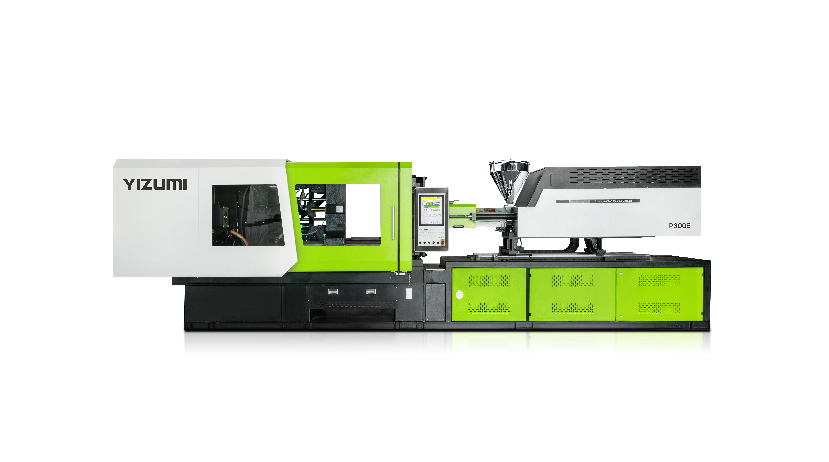
P-E Series High-speed Injection Molding Machine
PS5 Series: Injection Dynamics and Platen Support
YIZUMI PS5 Series High-Speed Injection Molding Machine combines high-speed injection with reinforced mold support and coordinated movements. YIZUMI presents molding applications for labeled milk tea cups, sauce containers and tamper-proof buckets on its product page. Match the injection unit, mold dimensions and motion sequence to the product's filling and handling requirements.
- Injection performance: Maximum injection speed is published as up to 550 mm/s. Confirm the applicable configuration and performance under molding pressure.
- Clamping capacity: 2,800 to 5,600 kN; selection should account for projected area, cavity pressure and mold fit.
- Platen support: Reinforced platens optimized through finite element analysis and an anti-tilt movable-platen support are designed to improve rigidity and parallelism.
- Coordinated movements: Synchronized mold opening and plasticizing are standard. Synchronized opening and ejection are optional and should be specified in the quotation.
Once a model and configuration have been proposed, assess whether the complete line can deliver the required volume.
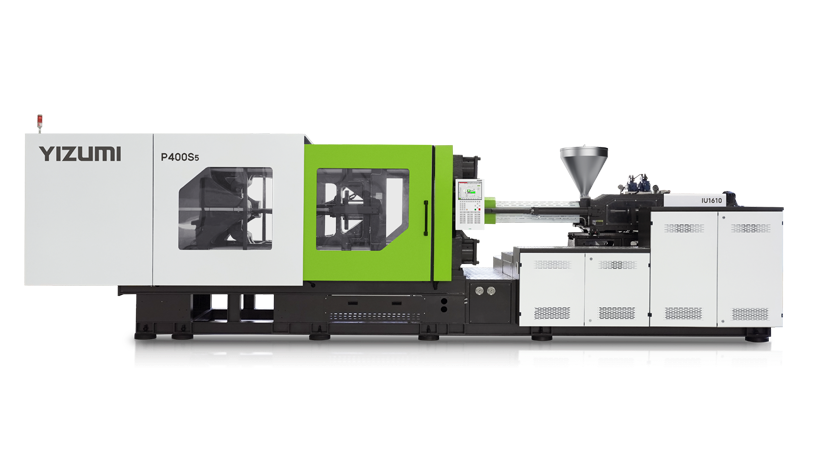
PS5 Series High-Speed Injection Molding Machine
Assessing Production Capacity Against Delivery Requirements
Turning Cycle Time into Hourly Output
Cavity count and cycle time provide a starting estimate of capacity. They need to be considered together.
YIZUMI publishes an HDPE cartridge molding example using eight cavities, with a part weight of 48 g and a cycle time of 18 ± 2 seconds. At an 18-second cycle, calculated output is: 8 × 3,600 ÷ 18 = 1,600 cartridges per hour
This is theoretical output before stoppages and rejected parts. The calculation method is useful, but the cycle time applies to that cartridge application.
Checking the Output You Can Schedule
Ask the supplier to demonstrate acceptable output during an agreed trial using the intended mold, resin and automated handling equipment. Review:
- Quality across cavities: Do parts from every cavity meet weight, dimensional and functional requirements?
- Interruptions: How much time is lost to alarms, label loading or handling faults?
- Available hours: How much time remains after planned changeovers and maintenance?
Calculate accepted parts per hour from the trial's total elapsed time. If that measurement already includes stoppages and rejects, avoid deducting those losses again.
Evaluating Energy Use and Cost per Accepted Part
Once output is established, compare the cost of producing that output. Machine purchase price is only one part of the investment.
Consistent Measurement Boundaries
Compare energy consumption using the same mold, resin, quality requirements and production sequence. Record which equipment is metered. Account for shared cooling and compressed-air services separately when estimating total production cost.
EUROMAP 60.2 provides a reference for product-related electrical energy measurement under specified machine and process conditions. For purchasing decisions, also calculate:
Energy per 1,000 accepted parts = measured kWh ÷ accepted parts × 1,000
Use energy and output recorded over the same period. This connects energy use to saleable output, making the comparison more useful than a power reading alone.
Comparing Quotation Scope
Compare quotations on the same equipment and service scope. An apparently lower price may exclude items needed to operate the line.
| Quotation item | What to confirm |
|---|---|
| Mold and auxiliaries | Hot runner, cooling equipment and utility requirements |
| Automation | Robot, labeling, inspection and stacking equipment |
| Commissioning | Installation, operator training and trial molding |
| Ongoing support | Spare parts, maintenance arrangements and service scope |
Estimate cost per accepted part using material, energy, labor, maintenance and equipment costs over a defined production volume. Assess whether a higher initial investment is justified by expected output and operating costs.
FAQs
Q1. How Do I Choose Between YIZUMI P-E and PS5 for My Packaging Project?
A: Compare the functions your project requires. P-E offers independent servo control and process monitoring; PS5 provides reinforced platen support and synchronized movements. Send YIZUMI the product and mold details so it can review injection capacity, clamping and automation requirements before recommending a configuration.
Q2. How Can I Check Whether a Proposed Line Will Meet My Output Target?
A: Request a complete automated trial using your production mold and specified resin. YIZUMI's packaging offering covers machines, molds and auxiliaries, so agree which equipment will be included. Compare accepted parts over total elapsed time and review the causes of rejected parts and stoppages.
Q3. Can YIZUMI Supply the Equipment Needed for IML Packaging?
A: YIZUMI's food-packaging offering includes machines, molds, labeling systems, labels and auxiliary equipment within its turnkey scope. Specify container dimensions, label requirements, cavity count and output. Confirm included equipment and validate labeling and handling during trials.
Q4. What Support Does YIZUMI Offer for a New Line or Equipment Upgrade?
A: YIZUMI lists material and mold review, equipment selection, line planning, installation, training, preventive maintenance and upgrades. For an existing line, provide mold drawings, cycle data and the problem to solve. Confirm compatible equipment, responsibilities and local service availability.
YIZUMI's Integrated Support for Packaging Production
YIZUMI combines injection molding machines with mold engineering, auxiliary equipment and service support to help packaging manufacturers plan production lines around product requirements.
Integrated solutions: Machines, molds and automation can be reviewed together to match the production process.
Packaging mold expertise: Features include optimized cooling channels, balanced hot runners and interchangeable cavities and cores.
Engineering support: Material review, mold-flow analysis and equipment selection help define a suitable configuration.
Production support: Installation, training and preventive maintenance are included in YIZUMI's published service offering, with scope confirmed for each project.
Planning a new packaging line or upgrading existing equipment? Share your product drawing, resin grade, mold details and target output to discuss a configuration and request a quotation. Request a Packaging Injection Molding Quotation