For manufacturers of computer, communication and consumer electronics components, thin walls, precise assembly features and visible surfaces create different molding challenges. A housing may need consistent filling without warpage, while a connector requires accurate mating dimensions. Meeting these requirements depends on coordinating material selection, mold design, process control and part handling.
YIZUMI's injection molding solutions for 3C electronics bring together application evaluation, machine selection, automation and production monitoring. From lightweight frames and connector housings to earphone charging cases, the focus is on addressing component-specific production problems and planning for consistent, acceptable output.
YIZUMI Injection Molding Solutions for 3C Applications
Different components call for different production priorities. YIZUMI's application services cover material selection, mold evaluation and production planning, helping manufacturers connect part requirements with a practical molding solution.
5G Communication: Thin-Wall Structures and Accurate Assembly
Applications: Mobile phone back panels, phone frames and antenna covers.
Thin sections and complex geometries can create filling difficulties, while distortion and flash may affect assembly.
Solution focus
- Material and mold evaluation: Review material selection, flow behavior and mold design against the component specification.
- Process planning: Develop filling, packing and cooling conditions that support dimensional consistency.
- Production integration: Coordinate part removal and subsequent handling with the molding cycle.
Computers: Dimensional Consistency for Functional Components
Applications: Electronic connector components and mouse wheel axles.
Small functional parts need repeatable dimensions at their mating surfaces. Variation can lead to assembly difficulties or inconsistent mechanical operation.
Solution focus
- Design and mold analysis: Identify critical features and evaluate mold flow before establishing the production process.
- Repeatable molding: Develop processing conditions around the required dimensions and part function.
- Line planning: Arrange material flow, part handling and peripheral automation to suit production requirements.
Consumer Electronics: Surface Quality and Part Handling
Applications: Smart speaker housings, Bluetooth earphone cases and USB connector components.
Visible components must meet appearance standards while retaining accurate assembly features. Manual finishing and handling can also become production bottlenecks.
Solution focus
- Appearance requirements: Evaluate material, mold design and processing needs against the agreed surface specification.
- Automated handling: Integrate takeout, positioning, runner removal, weighing and packaging where appropriate.
- Production visibility: Use process tracking and efficiency analysis to identify variation and production losses.
Selecting the Right Molding Process for 3C Electronic Components
A lightweight housing, a connector and a decorated cover present different molding challenges. Selecting a process starts with identifying what determines acceptance: complete filling, assembly fit or surface appearance.
Thin-Wall Molding for Lightweight Frames and Housings
For thin frames and covers, the challenge is filling narrow sections before the material cools, then controlling distortion during cooling and removal. Increasing injection speed alone may introduce additional surface defects or material degradation.
Evaluate these factors together:
- Material and flow: Review the resin's flow characteristics alongside wall thickness, flow path and gate position.
- Mold and cooling: Check venting, transitions between thick and thin sections, and cooling distribution.
Confirm complete filling and acceptable flatness during trials before shortening the cycle. A faster cycle has limited value if the part requires additional sorting or fails assembly.
Precision Molding for Connectors and Small Mechanical Parts
Connector housings and small functional components need consistent mating dimensions. Their production plan should begin with the drawing's critical features, rather than a general requirement for "high precision."
Define what must be measured:
- Assembly features: Identify mating surfaces, locating features and snap-fit dimensions, with their specified tolerances.
- Cavity consistency: Check samples from each cavity. Differences in filling, cooling or venting can create variation within the same production cycle.
Packing, mold temperature, cooling and ejection should be evaluated against those measurements. Part weight can support process monitoring, but it should not replace dimensional and assembly checks.
Surface-Finish Requirements for Visible Consumer Electronics Parts
For visible housings, agree on color, gloss, texture and acceptable gate or weld-line visibility before finalizing the mold and process.
YIZUMI's 3C solutions include in-mold decoration (IMD), including IML and INS, for integrating colors and patterns with molding. This provides an option for projects where decoration is part of the component design.
Compare the complete finishing route: evaluate molded appearance, decoration requirements, handling and inspection together. Use approved samples to establish acceptance criteria, then confirm that the proposed process can reproduce them.
YIZUMI Injection Molding Machines for 3C Applications
YIZUMI's 3C machine portfolio offers different approaches to precision control, thin-wall molding and mold stability. Selection starts with the component’s material, geometry and quality requirements, alongside the mold and planned automation.
FF-N Series Electric Injection Molding Machine
FF-N series combines servo control, mold protection and programmable control interfaces for precision molding and automation integration. Its configuration can be evaluated against the component’s molding requirements and the production cell's handling sequence.
- Independent motion control: Four servo motors control injection, plasticizing, clamping and ejection, supporting responsive speed, position and pressure control.
- Mold protection: The SMART protection function detects obstacles and resistance to help reduce mold damage.
- Flexible integration: Programmable I/O supports additional automation functions; servo motor-driven ejection is available as an option.
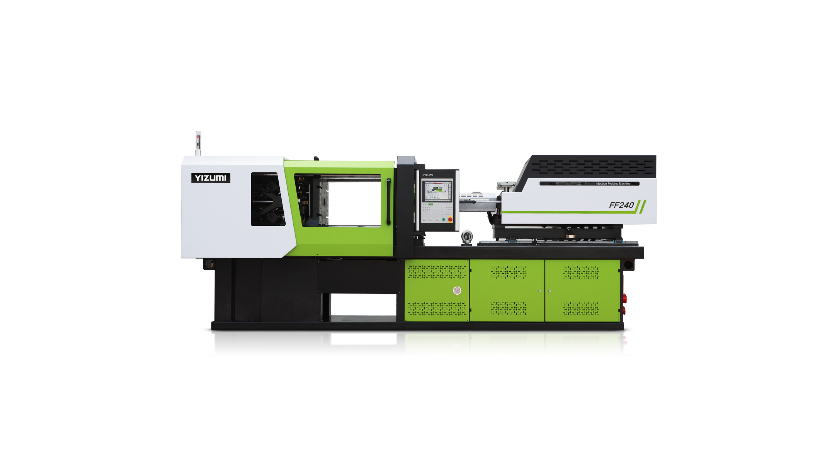
FF-N Series Electric Injection Molding Machine
SJII Series Injection Molding Machine for Thin-Wall Products
SJII series addresses thin-wall molding through a high-rigidity clamping unit and an optimized injection unit. For applications such as mobile phone frames, its design focuses on mold stability, filling control and consistent material preparation.
- Rigid clamping structure: Helps limit platen deformation during molding.
- Stable mold movement: Extended tie-bar guiding sections improve movable platen stability and reduce wear on mold guide rods.
- Improved plasticizing and mixing: Optimized screw design supports material and color mixing, helping manage color variation.
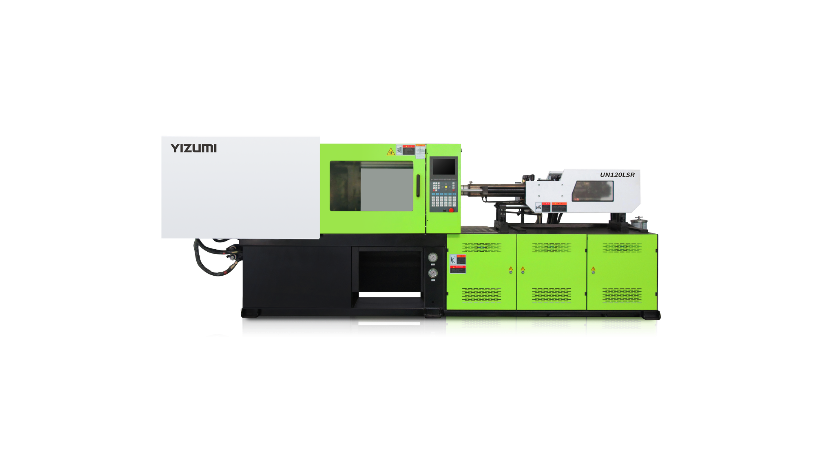
SJII Series Injection Molding Machine for Thin-Wall Products
A6 Series Advanced and Intelligent Injection Molding Machine
A6 series combines intelligent clamping management, platen design and weight control for applications requiring stable mold loading and consistent molding conditions. These features provide a basis for evaluating hydraulic molding options within a 3C production project.
- Intelligent clamping management: Monitors and maintains clamping force to support stable production.
- Dual pressure-center platens: Designed to reduce platen deformation and improve clamping force utilization.
- Intelligent weight V/P control: Adjusts the holding pressure switchover point or holding pressure to support consistent shot weight.
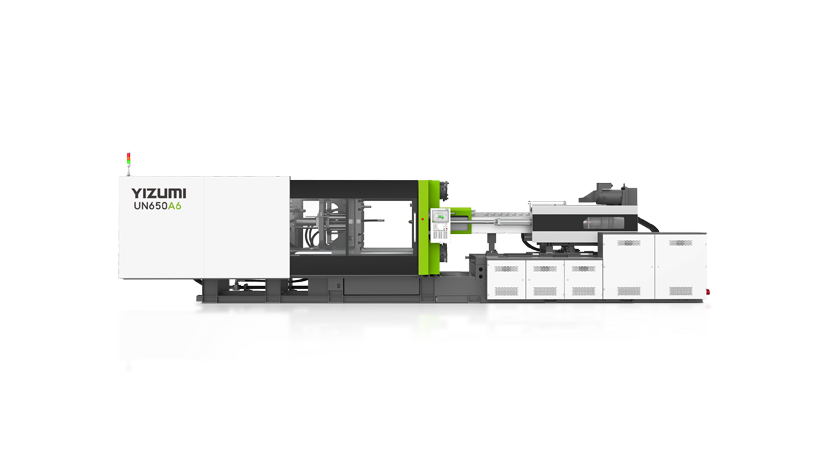
A6 Series Advanced and Intelligent Injection Molding Machine
Planning an Integrated Production Cell for 3C Electronics
A production cell should be planned around the delivery of acceptable components. A shorter molding cycle may bring little benefit if runner removal, inspection or packing cannot keep pace.
YIZUMI supports production line planning, peripheral automation and smart connectivity, allowing these requirements to be evaluated together.
Coordinate Molding, Part Handling and Finishing
YIZUMI's 3C automation solutions include multi-cavity part removal, fixture positioning, laser runner cutting, weighing and packaging. The appropriate combination depends on the component and its finishing requirements.
| Production stage | Planning priority |
|---|---|
| Part removal | Maintain orientation and protect delicate features |
| Runner cutting and finishing | Confirm positioning and acceptable cutting marks |
| Transfer and buffering | Accommodate differences between station cycle times |
| Packaging | Protect visible surfaces and separate component variants |
Assess station capacity and recovery after interruptions alongside the molding cycle. This helps identify where a buffer, additional fixture or different handling sequence may be needed.
Define Inspection, Sorting and Packaging Requirements
Set acceptance criteria before specifying inspection and sorting. For 3C components, these may include critical dimensions, assembly fit, surface appearance and the condition of trimmed areas.
Select the inspection method: Match dimensional measurement, visual checks or weighing to the defect being evaluated.
Define rejection handling: Establish how rejected or suspect parts will be separated from accepted production.
Confirm packaging requirements: Specify orientation, quantities and surface protection for the next operation.
Weight checks can indicate process variation, but they do not establish that every dimension or cosmetic feature meets requirements.
Calculate Accepted Output and Monitor Production Performance
Use the complete production cell's capacity when planning output. An initial estimate can be expressed as:Accepted parts per shift = completed cell cycles × parts per cycle × acceptance rate
Define "parts" consistently. Upper and lower housings count as separate components; the number of complete sets available for assembly depends on the accepted quantity of each.
YIZUMI's Yi+ platform supports equipment monitoring, efficiency analysis, fault diagnostics, process parameter tracking and production traceability. These functions help manufacturers investigate interruptions and process changes, while inspection records establish the accepted output.
FAQ
Q1. Which Plastics Can Be Used for 3C Electronic Components?
A: Options include ABS, PC, PC/ABS, PA and PBT, depending on the component’s strength, temperature, insulation and appearance requirements. Select a specific resin grade, then evaluate its flow and shrinkage characteristics against the part geometry and mold design.
Q2. How Should Manufacturers Choose an Injection Molding Machine for 3C Parts?
A: Start with the component drawing, resin grade and quality criteria. Evaluate injection capacity, filling requirements, clamping force, mold dimensions and automation interfaces together. For precision components, confirm performance through dimensional and assembly checks during molding trials.
Q3. Can YIZUMI Support Parts with Metal Inserts or Multiple Materials?
A: YIZUMI offers insert molding and multi-component molding options. These can be evaluated for components combining plastic with metal terminals, or designs requiring different colors or hard and soft materials. Suitability depends on insert positioning, material compatibility and component geometry.
Q4. Can an Existing Mold Be Used in a New Production Cell?
A: An existing mold requires a compatibility review before a machine recommendation can be finalized. Provide its dimensions, weight, mounting details, runner system, core-pull requirements and available production records. The evaluation should also cover part removal and downstream handling.
Discuss Your 3C Molding Project with YIZUMI
Whether the priority is thin-wall filling, assembly accuracy or visible surface quality, a project review starts with the component's acceptance requirements.
Prepare the following information for discussion:
- Component details: Drawings, dimensions, weight and critical tolerances.
- Material and appearance: Resin grade, color, texture and inspection criteria.
- Mold information: Existing mold specifications or proposed cavity count.
- Production targets: Required accepted output, operating schedule and finishing or packaging needs.
YIZUMI's services cover material and mold evaluation, equipment selection and production line planning. These inputs help define the molding configuration and automation scope for your project. Contact YIZUMI to Discuss Your 3C Molding Requirements