Injection molding solutions for auto parts need to address each component's appearance, fit and performance requirements. Door panels, optical lenses and bumper covers place different demands on material selection, mold design, filling, cooling and handling.
YIZUMI's DP series combines large-mold support with modular drive and injection configurations, while the FF series uses independent servo control and process monitoring. Matching the equipment to the mold, resin and production conditions helps establish a suitable configuration for the required part quality and output.
What Auto Parts Can YIZUMI Injection Molding Machines Produce?
YIZUMI injection molding machines can be configured to produce plastic components for vehicle interiors, lighting assemblies and exterior trim. The appropriate machine and process depend on the component's dimensions, material, mold and quality requirements.
Interior Parts: Door Panels, Instrument Panel Frames and Trim Components
Suitable machine configurations can produce the following automotive interior plastic parts:
- Plastic door panels and trim panels.
- Instrument panel frames.
- Steering column covers.
- Decorative trim substrates, including parts for subsequent electroplating.
- Molded plastic components for human-machine interfaces.
For large panels, equipment selection should account for mold fit, filling requirements and part-removal space. Smaller decorative components also require attention to dimensional consistency and surface appearance.
Depending on the machine, mold and auxiliary equipment, production can incorporate in-mold decoration, polyurethane in-mold coating, multi-component molding or foaming. These processes address different requirements for decorative surfaces, material combinations and component weight.
Lighting Parts: Lamp Housings, Taillight Covers, Light Guides and Lenses
YIZUMI injection molding machines can be configured to mold automotive lighting components, including:
- Plastic lamp housings.
- Two-color taillight covers.
- Light guides and light-guide blocks.
- Optical lenses, including thick-wall and multilayer designs.
The component determines the processing requirements. Lamp housings need consistent dimensions and assembly features. Covers, lenses and light guides require the specified surface and optical performance.
Multi-color and multilayer parts need an appropriate injection-unit and mold arrangement. Material preparation, mold temperature control, filling and cooling should be reviewed when selecting the equipment.
Exterior Parts: Bumper Covers, Fender Skirts and Spoilers
Suitable YIZUMI machine configurations can produce automotive exterior plastic parts, including:
- Bumper covers.
- Fender skirts.
- High-gloss plastic spoilers.
For these parts, assess mold dimensions, shot requirements, opening clearance and robotic access. Large components also need controlled handling to protect their shape and surface after ejection.
Bumper production can integrate the molding machine with material feeding, automatic mold change, robotic extraction, post-processing and YiMES manufacturing execution functions.
Include trimming, inspection and packing when planning the production cell and setting its output target.
Match Materials and Processes to Part Requirements
Select the Resin Grade for the Service Environment
Start with operating temperature, impact loads, chemicals, sunlight and appearance requirements. Compare specific resin grades, including fillers and additives, against the part specification.
| Material family | Typical automotive use | What to verify |
|---|---|---|
| PP compounds | Door panels and bumper covers | Stiffness, impact resistance and surface finish |
| ABS and PC/ABS | Interior trim and housings | Heat requirements, appearance and finishing compatibility |
| PA and reinforced PA | Underhood technical components | Heat exposure, fluids and material conditioning |
| PC | Lamp lenses and transparent covers | Optical performance, impact and coating requirements |
| PMMA | Taillight covers and light guides | Optical performance, weathering and impact-grade selection |
These are starting points for material evaluation. Confirm the supplier's grade data and processing instructions, then test molded parts against your acceptance criteria.
Choose the Process for the Required Function
The required feature should guide the molding process:
- Multi-component molding: combine colors or materials; verify compatibility, bonding and the molding sequence.
- In-mold decoration or polyurethane coating: create patterned or tactile surfaces; check adhesion, appearance and durability.
- Physical or chemical foaming: evaluate weight reduction; compare stiffness, dimensions and surface quality with a solid-part baseline.
YIZUMI's automotive molding process portfolio includes these approaches. Their use requires a compatible machine configuration, mold and auxiliary equipment.
Specify the resin and process before comparing machines, so each proposal addresses the same production requirements.
YIZUMI Injection Molding Machines for Automotive Parts
DP Series Two-platen Injection Molding Machine
For molding automotive parts such as engine covers and high-gloss spoilers, the DP Series Two-platen Injection Molding Machine combines rigid mold support with modular drive and injection configurations. Its programmable controls allow molding movements and auxiliary equipment to be coordinated within the production cell.
- Large-mold support: Extended, rigid movable-platen supports provide steady support and guidance for large molds.
- Flexible mold loading: Optional automatic tie bar retraction supports mold-loading arrangements where overhead clearance is limited.
- Modular configuration: Ecoservo drive technology, a variable piston pump and modular drive/injection matching allow power to be matched to process requirements.
- Coordinated movements: Mold opening can overlap with plasticizing, ejection or core pulling to support cycle-time optimization.
- Automation integration: Programmable movement sequences, expandable I/O and auxiliary-equipment communication support production-cell integration.
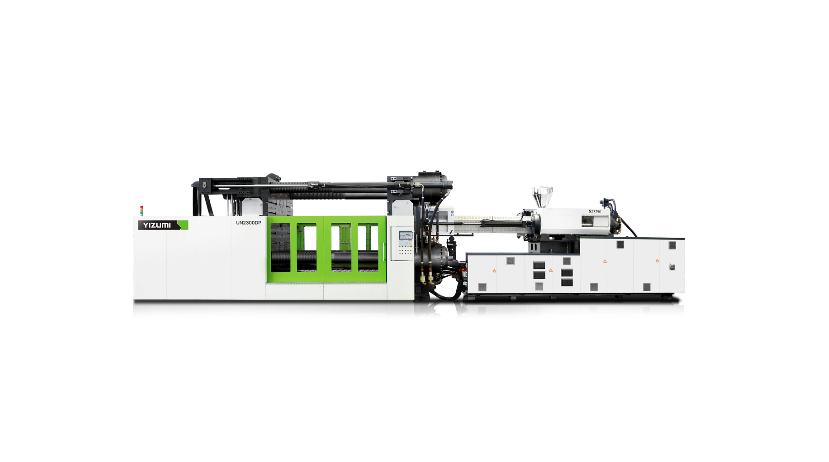
DP Series Two-platen Injection Molding Machine
FF Series Electric Injection Molding Machine
With independent servo control and integrated process monitoring, the FF Series Electric Injection Molding Machine supports molding automotive components such as steering column covers. It gives production teams control over machine movements and access to process data for monitoring consistency.
- Independent servo control: Four servo motors separately control injection, plasticizing, clamping and ejection.
- Closed-loop pressure control: Closed-loop control regulates injection pressure, with injection and holding pressure stability specified at ±0.1 MPa.
- Process monitoring: Standard process quality control (PDP) and statistical process control (SPC) functions support production tracking and analysis.
- Mold protection: SMART monitoring detects obstacles and resistance, helping limit mold damage from obstructions.
- Auxiliary mold functions: A built-in hydraulic pump station supports functions such as core pulling and nozzle contact force.
The pressure specification relates to machine control. Finished-part dimensions and quality should be validated with the intended mold, resin and production conditions.
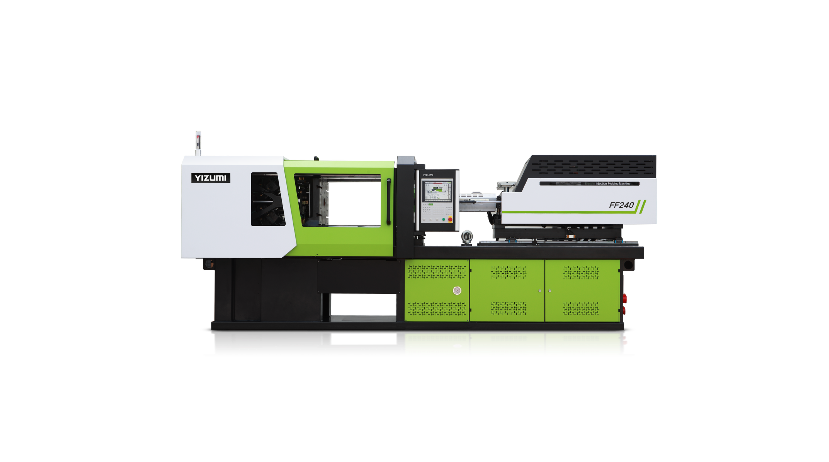
FF Series Electric Injection Molding Machine
Validate the Complete Production Cell
Validate the machine, mold and automation together under agreed production conditions. This gives the project team a common basis for assessing part quality and cell output.
Agree on Quality and Trial Conditions
Define the trial plan before testing:
- Material and mold: confirm resin grade, preparation method, mold configuration and active cavities.
- Test method: agree on run duration, sampling intervals and how samples will be identified by cavity.
- Acceptance criteria: specify critical dimensions, appearance, functional tests and allowable rejection levels.
- Process records: capture settings and relevant pressure, temperature and cycle data alongside inspection results.
Use the intended inspection methods and measurement equipment. Record deviations and corrective actions so the results can be reviewed against the agreed requirements.
Measure Cell Output and Document Approval Requirements
Measure output across the agreed production sequence, including robotic removal, trimming and inspection where applicable. Record accepted parts, rejected parts, stoppages and their causes during the test period.
For energy comparisons, define the measurement boundary and identify which auxiliary systems are included.
Equipment acceptance evaluates the agreed machine and production-cell performance. Where required by your customer, Production Part Approval Process (PPAP) documentation addresses whether parts made at production rates consistently meet engineering specifications.
Agree on responsibility for part measurements and approval documents before trials begin.
Compare Cost per Accepted Part and Prepare Your RFQ
Use a Consistent Cost Basis
Compare proposed DP and FF configurations using the same resin, mold, quality target and production schedule.
For your production study: Cost per accepted part = allocated production cost ÷ number of accepted parts.
Include material, labor, energy, maintenance and allocated tooling and equipment costs. Use the same calculation period and allocation method. Account for rejection and downtime without counting the same cost twice.
Use trial results where available, and label assumptions for cycle time, acceptance rate and operating hours.
For a broader equipment checklist, see our injection molding machine selection guide.
Send the Information Needed for a Technical Proposal
A useful machine RFQ includes:
- Part drawings, resin grade, fillers, part weight and quality criteria.
- Mold status, dimensions, weight, cavities and required interfaces.
- Projected area, shot requirements and target cycle.
- Annual demand, working hours and automation requirements.
- Installation location, utilities and training or service needs.
The quotation should identify the machine model, options and included equipment. Confirm responsibility for mold supply, auxiliaries, installation and acceptance trials.
For a machine recommendation and quotation, contact YIZUMI with your project details.
FAQ
Q1. Is Clamping Force Enough to Select a Machine?
A: Clamping force is one selection factor. The machine also needs suitable mold space, shot capacity, injection performance, plasticizing capacity and opening clearance. Review these with the resin grade, cavities and planned part-removal method.
Q2. How Is a Production Cycle Target Established?
A: Set the target through trials with the intended mold, resin and quality criteria. Include robotic extraction and relevant downstream operations. Measure accepted output during an agreed run so the target reflects the complete production cell.
Q3. Can an Existing Automotive Mold Be Transferred?
A: An existing mold may be transferred after compatibility checks. Confirm dimensions, weight, nozzle connection, ejection, core pulls, hot-runner interfaces and robot clearance. Then verify filling, part quality and cycle performance through trials.
Q4. What Determines Whether DP or FF Fits?
A: Choose the configuration that meets your mold, resin, process and output requirements. Compare DP's mold-support and modular drive features with FF's servo control and process monitoring, then confirm model-specific capacities and interfaces through technical review and trials.
Conclusion
Injection molding solutions for auto parts connect resins, molds and machines with production needs. From door panels and bumper covers to lamp housings and lenses, YIZUMI equipment supports automotive applications. Explore DP two-platen and FF electric machine features, material and process choices, and production-cell validation. Compare configurations using part quality, accepted output and cost per good part, then prepare the project details needed for a machine recommendation and quotation.