YIZUMI medical injection molding machines support the production of blood collection tubes, syringe components, PVC drip chambers and laboratory consumables. Different materials and geometries create distinct challenges, from filling deep cavities to controlling dimensional variation and protecting parts during removal.
FF-M combines contamination-reducing design features with pressure and weight control, while P-M offers rigid clamping and configurable high-speed injection. Matching these capabilities to the resin, mold and acceptance criteria provides a practical basis for machine selection. Coordinated inspection, handling and factory planning help translate molding performance into consistent production output.
Medical Components Molded with YIZUMI Injection Molding Machines
YIZUMI injection molding machines support medical plastic component production across diagnostic, therapeutic and pharmaceutical-related applications. Suitable machine, mold and material configurations help manufacturers address filling consistency, dimensional variation and deformation.
Diagnostic and Laboratory Consumables
YIZUMI injection molding machines can mold blood collection tubes, Petri dishes and deep-well plates, with configurations matched to each component's geometry and material.
| Medical component | Production challenges to address |
|---|---|
| Blood collection tubes | Consistent filling and tube dimensions |
| Petri dishes | Appearance, dimensional consistency and deformation |
| Deep-well plates | Complete filling of molded features and controlled cooling |
Material evaluation, mold-flow analysis and equipment selection help establish suitable molding conditions before production trials.
Therapeutic Consumables
YIZUMI injection molding machines support molding plastic parts for therapeutic consumables, where repeatable dimensions and consistent appearance matter during subsequent assembly and handling.
Supported applications include:
- Syringe components and disposable syringe caps: Control dimensional variation in features used for assembly.
- Blood tube filters: Address incomplete filling and consistency of small molded features.
- Medical trays and consumables containers: Manage filling and cooling to limit deformation.
Machine selection considers component geometry, resin characteristics and mold requirements rather than treating these applications as interchangeable.
Atomizing Cup Applications
YIZUMI injection molding machines also support atomizing cup production, featured within its pharmaceutical packaging applications.
Molding challenges addressed:
- Incomplete filling: Match injection conditions to resin flow and cup geometry.
- Dimensional variation: Establish repeatable molding conditions for consistent part dimensions.
- Visible defects and deformation: Evaluate mold design, holding pressure and cooling together.
Define Part Requirements Before Selecting the Machine
Selecting a medical injection molding machine starts with the component drawing, resin grade and mold specifications. YIZUMI's application support includes material selection, mold-flow analysis and equipment recommendations to connect these requirements with a suitable molding configuration.
Match Material and Geometry to Filling and Cooling
A resin name alone provides limited information for machine selection. Exact grade, processing conditions and component geometry influence plasticizing, filling and cooling requirements.
| Information to provide | Why it matters |
|---|---|
| Resin grade and supplier processing guidance | Guides material preparation and plasticizing requirements |
| Part weight, wall thickness and flow length | Helps assess shot capacity and filling demands |
| Mold dimensions, cavity count and runner design | Supports checks of mold compatibility and total shot requirements |
| Cooling layout and target cycle time | Helps evaluate whether production targets are practical |
For example, YIZUMI's blood collection tube application uses PET, a 5.2 g component and a 16-cavity mold. These details provide a more useful selection basis than "a machine for medical tubes."
Set Critical Dimensions and Acceptance Criteria
Define acceptable parts before comparing machine specifications. For syringe components, assembly dimensions may be critical; for Petri dishes, appearance and deformation may require closer attention.
Include these requirements in the project brief:
- Critical dimensions: Identify tolerances on drawings and agree on measurement methods.
- Visual acceptance: Specify limits for flash, short shots, surface marks and deformation.
- Trial conditions: Agree on resin, mold, operating conditions and sampling across cavities.
Machine positioning repeatability and finished-part tolerance describe different measurements. Evaluate molded samples against component requirements before accepting a production configuration.
YIZUMI Medical Injection Molding Machines: FF-M and P-M
FF-M and P-M address different medical molding requirements. Selection depends on component geometry, material, mold design and production conditions.
FF-M: Cleanliness Features and Process Control
YIZUMI's FF-M medical injection molding machine supports applications including micro tubes, deep-well plates, blood tube filters and disposable syringe caps. Its design combines features that help reduce contamination risks with controls for managing variation during repeated molding cycles.
- Reduced lubrication exposure: Platens move without contacting the tie bars, which require no lubricating oil, helping reduce a potential source of product contamination.
- Closed-loop pressure control: Injection and holding-pressure control accuracy reaches ±0.1 MPa, supporting stable processing.
- Intelligent weight control: Real-time parameter adjustments help reduce part-weight variation associated with changes in material properties and mold temperature.
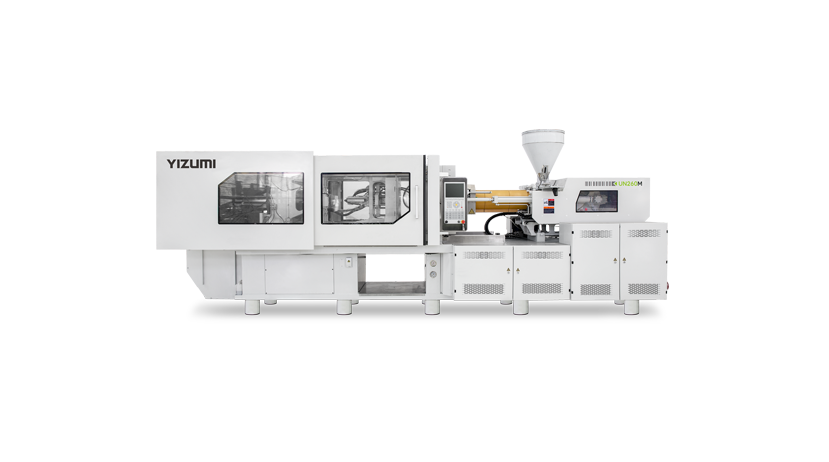
FF-M medical injection molding machine
P-M: Configurations for Deep-Cavity Molding
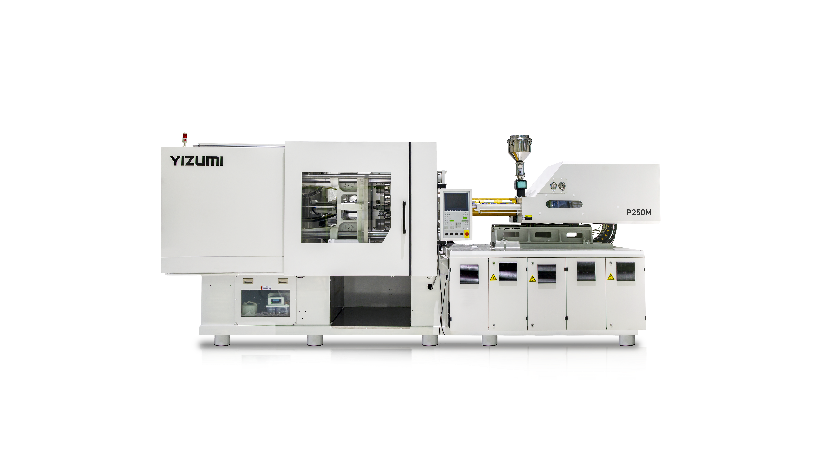
YIZUMI's P-M injection molding machine features a high-rigidity clamping unit for deep-cavity components and parts with a large length-to-diameter ratio. Configurable injection options help manufacturers match filling requirements to the selected resin and mold.
- Clamping stability: A reinforced toggle structure helps limit platen deformation during demanding molding cycles.
- Optional high-speed injection: Injection speeds of up to 500 mm/s are available, subject to the selected configuration and application requirements.
- Optional electric injection: Supports improved injection control and synchronous plasticizing, allowing material preparation to overlap with other cycle operations.
| Selection consideration | FF-M | P-M |
|---|---|---|
| Features to evaluate | Lubrication exposure, pressure and weight control | Clamping rigidity and configurable injection |
| Application starting points | Micro tubes, plates, filters and syringe caps | Deep-cavity and high length-to-diameter components |
| Confirm before ordering | Material, mold compatibility and trial acceptance criteria | Required injection options, mold compatibility and trial results |
Medical Molding Application Configurations
Medical plastics require different molding configurations. YIZUMI's injection molding machines support the following applications, with machine selection matched to material behavior, component geometry and mold requirements.
| Molded component | Material | Machine | Mold cavities | Reference cycle |
|---|---|---|---|---|
| Drip chamber | PVC | FF300M | 24 | 8 ± 1 seconds |
| Prefilled syringe component | COP | FF200M | 32 | 25 ± 1 seconds |
| Blood collection tube | PET | P250M | 32, 48 or 64 | 8 ± 1 seconds |
PVC Drip Chambers and COP Syringe Components
PVC drip chambers: FF300M supports a 24-cavity configuration. Controlled temperature, residence time and injection conditions help manage PVC degradation, while balanced filling supports consistency across cavities.
COP syringe components: FF200M supports a 32-cavity configuration producing components weighing 1.4 g, with dimensions of Ø13.8 × 64.5 mm. Electric injection control and automated removal support dimensional consistency and reduced operator contact. This application covers molded plastic components for subsequent processing and assembly.
PET Blood Collection Tubes
P250M supports deep-cavity PET tube molding with 32-, 48- or 64-cavity hot-runner molds. High-speed injection and rigid clamping address long flow paths and dimensional requirements.
Reference cycles describe specific application configurations. Confirm achievable cycle time and acceptable output through trials using the intended resin, mold and handling system.
Planning a Medical Injection Molding Production Line
A medical injection molding machine needs coordinated material supply, part removal and inspection to maintain production flow. YIZUMI's medical solutions include factory layout planning, machine and mold selection, part handling and intelligent production management.
Coordinate Molding, Part Removal and Inspection
Plan how components move from the mold to their next operation before finalizing automation.
| Production stage | Questions to resolve |
|---|---|
| Part removal | Can the robot remove every shot without damaging molded features or delaying the cycle? |
| Inspection | Which defects require detection, and can inspection keep pace with molding? |
| Transfer | How will accepted parts reach assembly or packaging with controlled handling? |
| Reject separation | How will rejected parts remain separate from accepted components? |
Define handling and inspection requirements around the component. Syringe parts may need protection of assembly features, while trays and plates require handling that limits deformation.
Match Line Capacity to Production Demand
Calculate output using planned operating time and expected yield:
Estimated accepted parts per shift = cavities × 3,600 ÷ cycle time in seconds × scheduled hours × availability × acceptance rate
Use trial data to refine cycle time and acceptance rate. Include changeovers, cleaning and maintenance when estimating availability. More cavities increase theoretical capacity, but downstream equipment must handle the additional parts.
Plan Factory Layout and Maintenance Access
Reserve space for more than the machine footprint:
- Material supply: Resin preparation, conveying and replenishment.
- Downstream equipment: Robots, inspection stations and transfer systems.
- Service access: Mold changes, cleaning and preventive maintenance.
Cleanroom and Quality Requirements for Medical Injection Molding
Clean production depends on equipment design, environmental controls and handling procedures working together. Define these requirements before selecting a YIZUMI medical injection molding machine and planning its installation.
Define Cleanroom Requirements for the Component
ISO 14644-1 classifies air cleanliness by airborne particle concentration. Selecting a cleanroom class requires consideration of component use, contamination risks, downstream processing and applicable requirements. Cleanroom classification alone does not establish product sterility.
Clarify three points during project planning:
- Exposure: Where will molded components contact the surrounding environment?
- Transfer: How will parts move to inspection, assembly or packaging?
- Verification: Which environmental and product checks will demonstrate acceptable conditions?
Control Contamination During Molding and Handling
| Potential source | Control to evaluate |
|---|---|
| Resin dust and open containers | Enclosed conveying and controlled material storage |
| Direct operator contact | Automated removal and defined handling procedures |
| Maintenance activities | Cleaning procedures and planned service access |
FAQ
Q1. How Do I Choose Between FF-M and P-M?
A: Evaluate FF-M when lubrication exposure, pressure stability and part-weight consistency are important. Consider P-M for deep-cavity components requiring rigid clamping and configurable high-speed injection. Confirm either choice against the resin, mold and acceptance criteria.
Q2. Can YIZUMI Injection Molding Machines Produce Prefilled Syringes?
A: YIZUMI's FF200M supports molding COP plastic components for prefilled syringes. Producing a finished prefilled syringe also requires downstream operations such as assembly, filling and packaging, with sterilization where applicable.
Q3. Does Every Medical Component Require the Same Cleanroom Class?
A: No. Select environmental controls according to component use, contamination risk, downstream processing and applicable requirements. Air-cleanliness classification alone does not establish product sterility.
Q4. What Information Is Needed for a Machine Recommendation and Quotation?
A: Provide the component drawing, resin grade, part weight, mold specifications and production target. Include cleanroom, inspection and handling requirements so the proposed configuration reflects the complete production process.
Conclusion
YIZUMI medical injection molding solutions combine FF-M and P-M machines with mold selection, material evaluation and production line planning. These machines support molding blood collection tubes, syringe components, drip chambers and laboratory consumables. Suitable configurations address filling, dimensional consistency and handling demands. Selection should follow part drawings, resin choices, mold requirements and output targets, with cleanroom controls matched to each medical application.